Unmasking the Shadows: Inside the Dark Web of coinbase-mywallet.com Phishing and Malware Networks
Our investigation of the phishing domain coinbase-mywallet.com, registered on 16 January 2025, traced three IP addresses to malware samples and a command-and-control server. Domains such as carder.bit and ns1.wowservers.ru appear in the infrastructure, and community reports link it to the APT40 group. The attribution rests on shared indicators, not on proof.
WebThreat Research · Published · 4 min read

Phishing domains and malware infrastructures are the silent predators of the digital age. In this deep dive, we unravel the intricate web surrounding coinbase-mywallet.com, exposing its ties to sophisticated threat actors and revealing the hidden mechanisms that make such operations thrive.
1. The Genesis of coinbase-mywallet.com
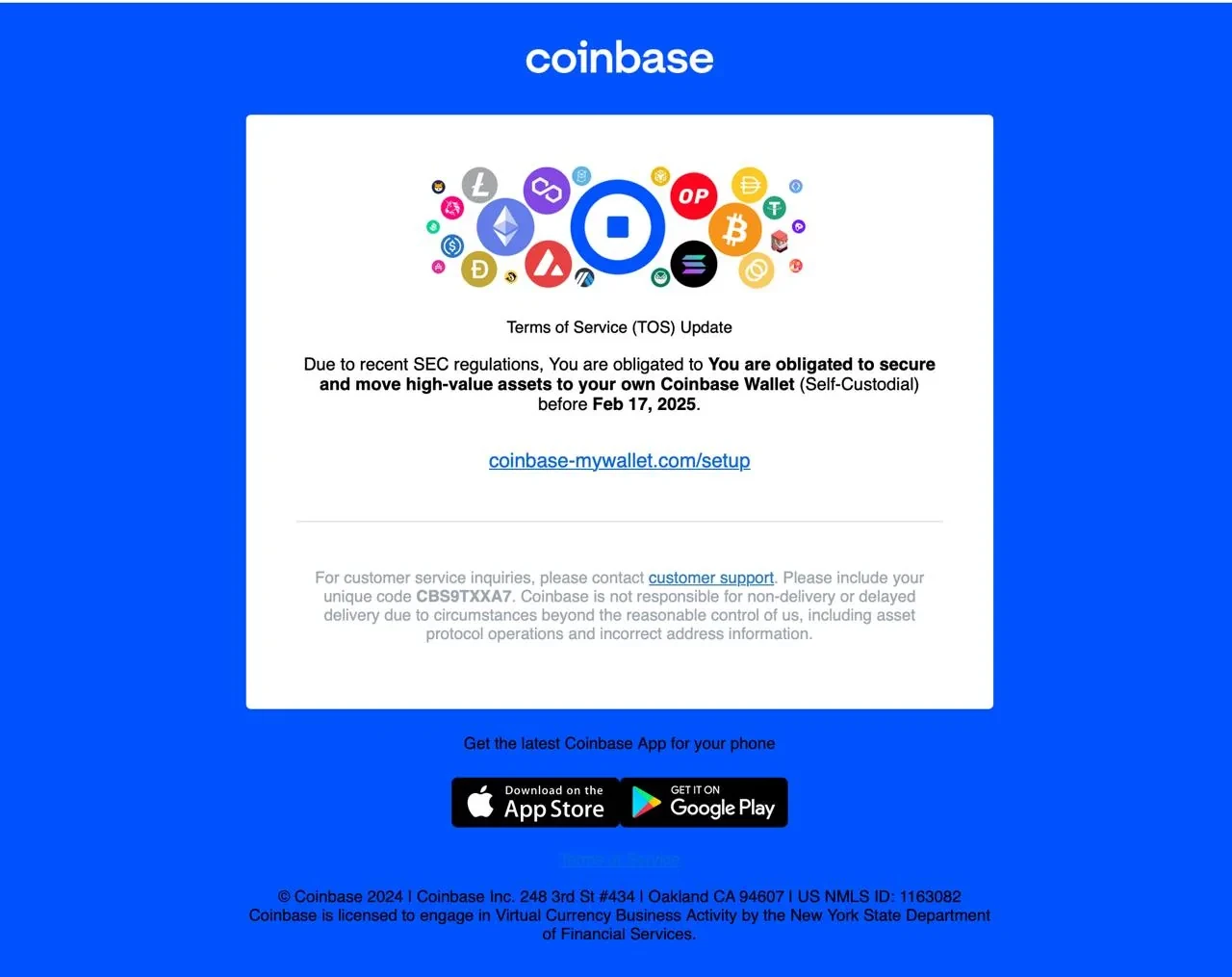
1.1. Birth of a Deception
Phishing domains like coinbase-mywallet.com are meticulously crafted to mirror legitimate services, deceiving unsuspecting users into divulging sensitive information. This particular domain targets the cryptocurrency and finance sectors, exploiting the trust users place in well-known brands.
1.2. Initial Footprints
- Domain Registration: Registered on 16th of January, 2025, leveraging privacy protection to obscure ownership.
- Hosting Providers: Utilizes a combination of cloud services and compromised servers to maintain resilience and anonymity.
2. Investigation Timeline
2.1. Initial Query and IP Resolution
- Request: Reverse-search for infrastructure tied to coinbase-mywallet.com.
Associated IPs:
- 172.67.69.97
- 104.26.10.241
- 104.26.11.241
2.2. Malware Association
IP Analysis:
- 104.26.10.241 and 104.26.11.241 linked to multiple malicious files:
- Malware Hash: b80d0fb7c23ec2cbdb5ab0bf9d50868c78b246807ca08ab81ebc32ed928f8aa5
- Behavior: Analysis reveals connections to IP 66.171.248.178, indicating potential command-and-control (C2) operations.
Evidence:
- VirusTotal Samples: Confirmed malware presence.
- Cross-Referencing IPs: Association with known malicious activities.
3. Infrastructure Analysis
3.1. Malicious Domains
- carder.bit: Likely used for C2 communication or data exfiltration.
- ns1.wowservers.ru: Suspected of hosting or dynamically resolving malware infrastructure.
- ipv4bot.whatismyipaddress.com: Potentially utilized for reconnaissance, IP validation, or system profiling.
3.2. Anecdotal Attribution to APT40
Community reports and heuristic analyses link ns1.wowservers.ru to APT40, a renowned Advanced Persistent Threat group known for their persistent and adaptive cyber operations.
- APT40 Profile: Detailed on Malpedia, highlighting their methodologies and targets.
4. Attribution to APT40
4.1. Understanding APT40 (Leviathan)
Known Activity:
- State-Sponsored Operations: Primarily attributed to Chinese actors.
- Target Sectors: Defense contractors, maritime industries, and entities involved in intellectual property theft.
Operational Methods:
- Infrastructure Reuse: Leveraging previously compromised assets for new campaigns.
- Phishing Campaigns: Serving as initial access vectors to infiltrate target networks.
4.2. Corroborating Evidence
- Infrastructure Patterns: Repeated use of specific IP addresses and domains aligns with APT40’s known infrastructure.
- Tactics and Techniques: Phishing and credential theft strategies match APT40’s modus operandi.
5. Deep Dive into the Phishing Campaign
5.1. Phishing Mechanics of coinbase-mywallet.com
- Deceptive Design: Mirrors legitimate Coinbase interfaces to instill trust.
- Credential Harvesting: Employs secure forms to capture usernames, passwords, and two-factor authentication codes.
5.2. Malware Deployment
- Infection Vectors: Malicious downloads disguised as legitimate software updates or transaction verifications.
Payload Capabilities:
- Data Exfiltration: Stealing sensitive user information.
- System Compromise: Granting attackers persistent access to infected devices.
6. Technical Breakdown of Infrastructure
6.1. IP Address Utilization
- 172.67.69.97: Acts as a primary entry point, managing initial user interactions.
- 104.26.10.241 & 104.26.11.241: Serve as backend servers for malware distribution and C2 communications.
- 66.171.248.178: Identified as a secondary C2 server, facilitating command relay and data aggregation.
6.2. Domain Roles
- carder.bit: Handles C2 communications, ensuring encrypted channels for data transmission.
- ns1.wowservers.ru: Provides dynamic resolution services, making it harder to track and block malicious activities.
- ipv4bot.whatismyipaddress.com: Utilized for reconnaissance tasks, gathering network information from compromised systems.
7. Attribution to APT40: Connecting the Dots
7.1. Community Reports and Intelligence Sharing
Multiple cybersecurity communities and threat intelligence platforms have flagged ns1.wowservers.ru as being associated with APT40 activities, reinforcing the connection through shared indicators of compromise (IOCs).
7.2. Historical Patterns
APT40’s history of targeting financial sectors and their preference for infrastructure reuse align with the findings in the coinbase-mywallet.com investigation.
8. Conclusions and Observations
8.1. Phishing Campaign Efficacy
- Targeted Sectors: Cryptocurrency and finance, leveraging high-value targets.
- User Deception: Advanced design techniques increase the likelihood of successful credential harvesting.
8.2. Malware and Infrastructure Robustness
- Reusability: The infrastructure’s reuse across multiple campaigns indicates a scalable and efficient operation.
- Resilience: Dynamic domain resolution and multiple C2 channels enhance the campaign’s persistence.
8.3. Threat Actor Profiling
- APT40’s Signature: The alignment of tactics, techniques, and infrastructure with APT40’s known behavior strongly suggests their involvement.
- Broader Implications: Highlights the ongoing threat posed by state-sponsored groups in targeting critical sectors.
Final Thoughts: Vigilance in the Digital Battlefield
The investigation into coinbase-mywallet.com serves as a stark reminder of the relentless sophistication employed by threat actors like APT40. As phishing campaigns and malware infrastructures evolve, so must our defenses. Proactive security measures, combined with continuous monitoring and user education, are paramount in safeguarding against these pervasive threats.
Stay alert, stay secure, and never underestimate the power of a single phishing domain to wreak havoc on your digital ecosystem.
Acknowledgments
- Security Research Community: Continually advancing our understanding of lurking misconfigurations and emerging threats.
- Authors and Analysts: Dedicated professionals whose relentless efforts enhance our collective cybersecurity posture.
Note: The findings and methodologies presented in this report are intended for educational and awareness purposes. Always adhere to legal frameworks and ethical guidelines in cybersecurity research and domain management.
First published on Medium on 17 January 2025.
Terms used in this article
Sources
- VirusTotal (malware samples referenced in the analysis), VirusTotal, accessed
- APT40 (Leviathan) actor profile, Malpedia (Fraunhofer FKIE), accessed
Related
Stolen-data ecosystem and actors
php2shell: the two critical PHP flaws and what to do now
php2shell is the name for two critical flaws in the PHP runtime, CVE-2026-109618 and CVE-2026-109619, both rated CVSS v4.0 9.2. They can allow unauthenticated r...
Stolen-data ecosystem and actors
Case Study: Unveiling 642,639 Government Credential Leaks Across 192 Countries
The Global Government Credential Leaks Study found 642,639 government credential leaks across 192 countries, collected from 83 dark web and Telegram sources. Br...
Stolen-data ecosystem and actors
FBI Crushes Nulled & Cracked.io, but Cybercriminals Already Have a Backup Plan
After the January 2025 seizure of the forums Nulled.to and Cracked.io, cybercriminals are shifting stolen-data trading to Telegram “clouds”. The article explain...
See your leadership's exposure
CEM finds your executives from your company name, checks them against breach corpora and leak databases, and scores each person from 0 to 100.