Supply Chain Secrets: How Stolen Credentials Reveal Your Business’s Weakest Links
Credentials taken by infostealers and command and control servers often keep the full login URL. The path shows which supplier portals, APIs and third-party systems a company uses, which gives attackers a map of its supply chain. The article explains how to read such entries, what follows from a breach and four defensive steps.
WebThreat Research · Published · 4 min read
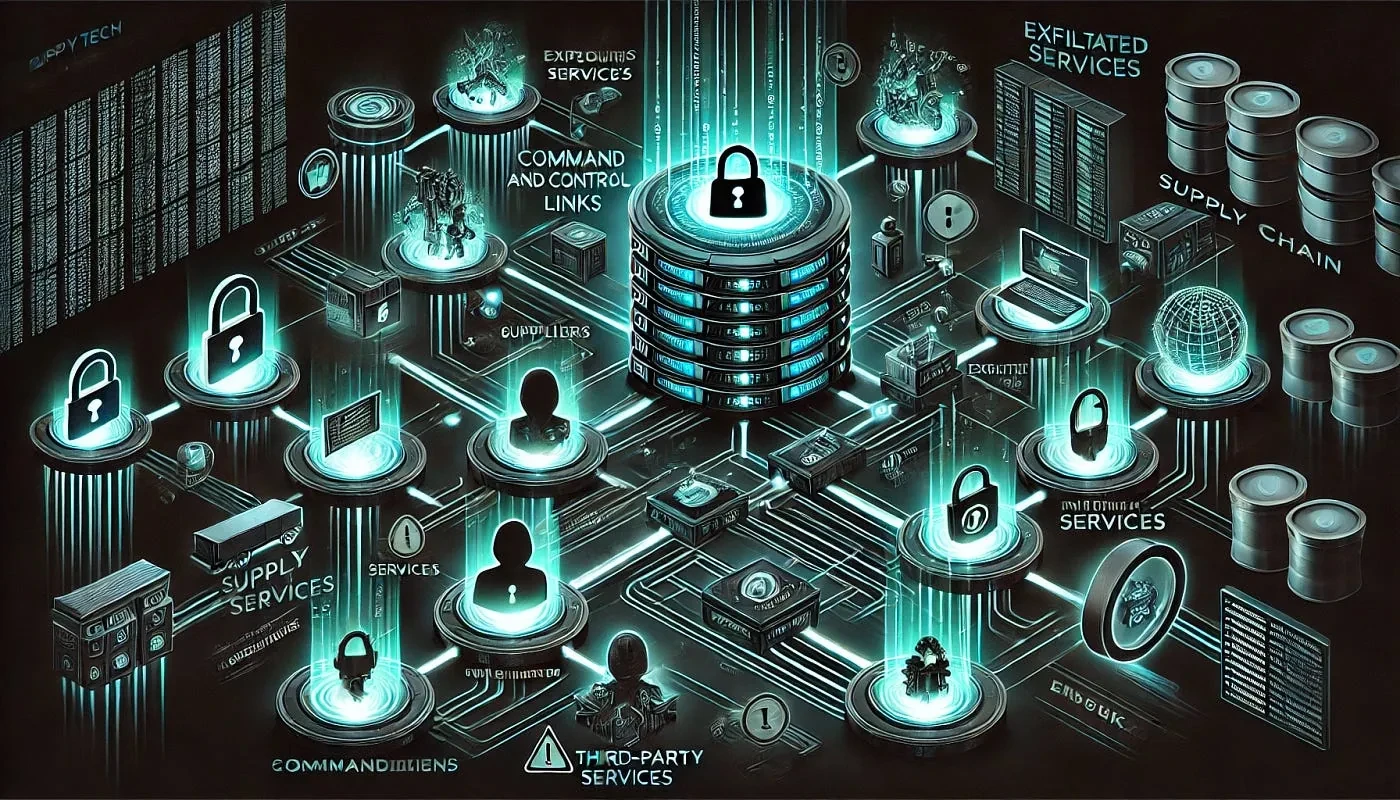
In today’s interconnected digital landscape, the security of your business isn’t just about safeguarding your own systems. It extends to every partner, supplier, and service provider you rely on. Recent cyber threat intelligence reveals a worrying trend: attackers are leveraging stolen credentials not just to breach individual systems, but to map out entire supply chains, identifying and exploiting the weakest links. Let’s dive into how this happens and what it means for your business.
The New Frontier of Cyber Reconnaissance
Supply chain reconnaissance has become a critical tactic in modern cyber attacks. Gone are the days when hackers focused solely on infiltrating a single company’s network. Now, with the rise of Command and Control (C2) servers and sophisticated data exfiltration methods, attackers are gaining unprecedented insights into the intricate web of relationships that make up a company’s supply chain.
Imagine a scenario where hackers infiltrate a C2 server, exfiltrating not just login credentials but also detailed paths that link your business to its suppliers and third-party services. These paths might look something like this:
domain.com/supplier/api/endpoint:[email protected]:SecurePass!123
At first glance, this appears to be a standard set of credentials. However, the inclusion of the complete path (/supplier/api/endpoint) is a goldmine for attackers, enabling them to map out your entire supply chain infrastructure.
How Exfiltrated Credentials Unveil Your Supply Chain
1. Decoding the Data: Credentials stolen via InfoStealers and C2 servers are often sold or shared in underground forums and Telegram hacking groups. These credentials are typically structured to include:
- Domain: The main company’s domain (e.g., domain.com).
- Path: Specific endpoints that indicate which system or supplier is being accessed (e.g., /supplier/api).
- Email/Password: Login details for that particular endpoint.
2. Path Analysis: The Hidden Clues: The paths embedded within these credentials can reveal:
- Supplier Details: Identifying specific suppliers or third-party services your company uses.
- System Insights: Gaining information about internal systems and APIs.
For example, a path like /sap/portal/login suggests that your company uses SAP services, which could lead attackers to target SAP’s infrastructure for vulnerabilities.
3. Mapping the Attack Surface: Attackers use these paths to:
- Identify Suppliers: Understanding which third-party services are part of your supply chain.
- Target Vulnerabilities: Finding and exploiting weak links within these suppliers’ systems.
- Expand Access: Using compromised supplier credentials to infiltrate deeper into your network.
A Real-World Example: Breaking Down the Threat
Consider the following credential set:
https://domain.com/supplier/portal/login:[email protected]:Password!123
Analysis:
- Path Identification: /supplier/portal/login points to a specific supplier’s portal.
- Attack Vector: With these credentials, an attacker can attempt to log in to the supplier’s system, potentially accessing sensitive transactional data, invoices, or customer information.
- Potential Impact: Unauthorized access could allow attackers to manipulate supply chain processes, such as rerouting shipments or altering invoices, leading to significant operational disruptions.
The Ripple Effects of Supply Chain Breaches
-
Widespread Disruptions: By compromising a single supplier, attackers can cascade their access through your entire supply chain, leading to extensive operational disruptions.
-
Reputation at Stake: Supply chain breaches often expose sensitive data, damaging your company’s reputation and eroding customer trust.
-
Regulatory Repercussions: Exposure of compromised credentials can highlight compliance failures, resulting in hefty regulatory fines and legal consequences.
Strengthening Your Defense Against Supply Chain Reconnaissance
-
Prioritize Credential Hygiene: Ensure that all credentials, especially those with access to critical suppliers and internal systems, are strong, regularly updated, and monitored for unusual activity.
-
Manage Third-Party Relationships: Implement robust security controls and regular audits for all third-party suppliers to ensure they adhere to stringent security standards.
-
Monitor Exfiltrated Data: Stay vigilant by monitoring for leaked credentials in hacking forums and channels. Early detection can prevent attackers from leveraging this data against your supply chain.
-
Comprehensive Supply Chain Security: Adopt a holistic approach to supply chain security, recognizing that the weakest link can compromise the entire network. Invest in security solutions that offer visibility and protection across all facets of your supply chain.
Conclusion
The landscape of cyber threats is evolving, with attackers increasingly targeting the supply chains that underpin modern businesses. The combination of exfiltrated credentials and detailed path information offers a potent tool for attackers to map and exploit supply chain vulnerabilities. For businesses, this underscores the critical importance of maintaining stringent credential hygiene, managing third-party relationships with care, and adopting comprehensive security measures to protect against these emerging threats. By staying proactive and vigilant, organizations can safeguard their supply chains and mitigate the risks posed by these sophisticated cyber adversaries.
Stay secure and informed. Protecting your supply chain is not just a technical challenge, it’s a strategic imperative.
First published on Medium on 18 January 2025.
Terms used in this article
Related
Stolen-data ecosystem and actors
php2shell: the two critical PHP flaws and what to do now
php2shell is the name for two critical flaws in the PHP runtime, CVE-2026-109618 and CVE-2026-109619, both rated CVSS v4.0 9.2. They can allow unauthenticated r...
Stolen-data ecosystem and actors
Case Study: Unveiling 642,639 Government Credential Leaks Across 192 Countries
The Global Government Credential Leaks Study found 642,639 government credential leaks across 192 countries, collected from 83 dark web and Telegram sources. Br...
Attacks that use leadership data
Ransomware-as-a-Service (RaaS): How Cybercrime Went Mainstream, and How Your Business Can Stay Safe
Ransomware-as-a-Service lets developers lease ransomware to affiliates for a share of the profits, so attackers no longer need elite skills. Small and medium-si...
See your leadership's exposure
CEM finds your executives from your company name, checks them against breach corpora and leak databases, and scores each person from 0 to 100.