One Typo Away from Disaster: The Unseen Threat of NS Record Exploitation
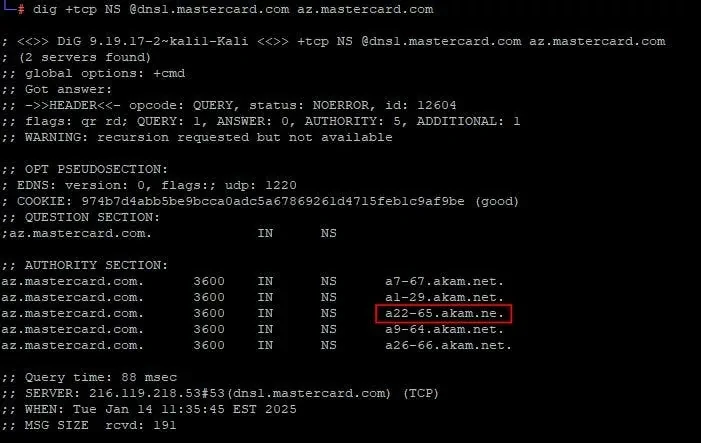
A single mistyped nameserver, such as a22-65.akam.ne instead of akam.net, can let an attacker who registers that domain intercept traffic for a subdomain. A Mastercard record carried this typo for over four years. We ran a script across 10,000 top domains and found 32 false positives and 12 genuine issues. The article covers the attack steps and mitigations.
WebThreat Research · Published · 4 min read
Tiered takeover, misdirected traffic, and silent DNS hijacks: dive into the underbelly of Nameserver Exploitation.
1. When a Single Letter Breaks Everything
DNS sits at the core of the internet. A simple text record can shift millions of users from your secure site to a malicious clone. One of the deadliest cracks in this foundation is NS Record Exploitation, where a typo, an abandoned domain, or a slightly misspelled TLD in your DNS configuration can give attackers complete control over your traffic.
Exhibit A: A global payment giant recently had a subdomain NS pointing to a22-65.akam.ne instead of the correct a22-65.akam.net (legitimate Akamai). That missing “t” put them at risk for 4.5+ years, potentially exposing credentials, financial data, and internal communications. As security researcher Philippe Caturegli discovered, someone in Russia registered the typo-ed domain as far back as 2016. Even if no large-scale breach materialized, the potential for catastrophe was there.
2. Understanding NS Record Exploitation
- Nameserver (NS) Records These DNS entries delegate authority of a domain (or subdomain) to specific nameservers. If any of those nameservers point to an unregistered or hijacked domain, your traffic becomes fair game.
- Typoed & Abandoned Domains
Attackers thrive on small oversights. A single missing character (e.g.,
.com→.co) or an outdated provider (e.g.,ns1.oldcloud.com) can become a Trojan horse. - Security vs. Convenience Organizations often skip DNS audits because they appear “set and forget.” But stale or incorrect DNS entries can linger for years, silently exposing entire infrastructures.
3. Our 10,000 Domain Study
To measure the scope of NS vulnerabilities, we ran a script across 10,000 top domains:
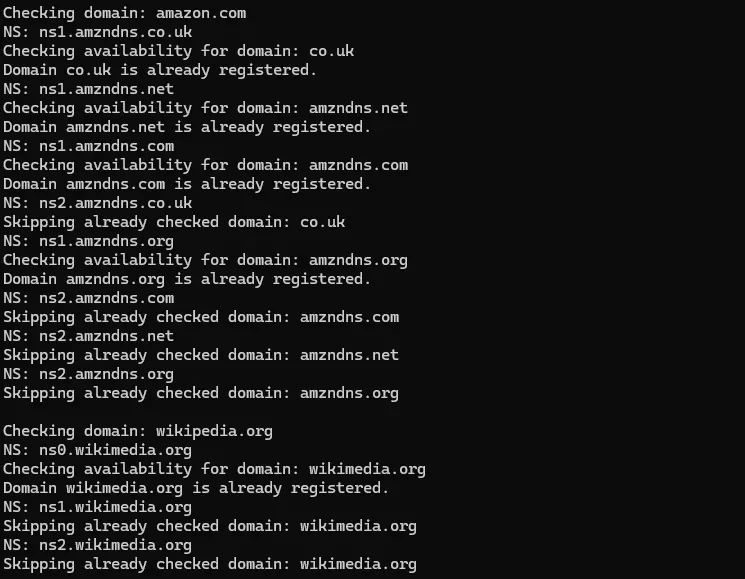
32 False Positives
- Initially flagged domains where the script thought an NS was unregistered, but deeper checks showed them to be legit or brand-protected variations.
12 Genuine Issues
- Real-world misconfigurations, each one a potential backdoor for attackers.
While 12 may sound negligible, consider the fallout if your domain, or a major financial platform’s domain, is among them. It only takes one compromised record to orchestrate devastating phishing, eavesdropping, or denial-of-service attacks.
4. Anatomy of an NS Takeover
- Reconnaissance
- Attackers scan DNS records or leverage wordlists, searching for any NS domain that’s not registered or that expired.
- Weaponization
- The malicious actor purchases the unclaimed domain and spins up a DNS server.
- Delivery
- Once live, they can intercept DNS requests for the victim’s subdomain.
- Exploitation
- Man-in-the-Middle (MITM): All traffic can be captured or manipulated.
- Phishing: Users see a correct URL but unknowingly land on a cloned site.
- Service Sabotage: Attackers reroute or drop traffic, causing massive outages.
5. Why This Threat Persists
- Human Error: Copy-pasting in DNS configs is error-prone; a single “off-by-one” can lead to major consequences.
- Internal Silos: Many organizations treat DNS changes as a set-and-forget routine, rarely re-checking them unless something fails.
- Lack of Awareness: Security teams focus on endpoint or perimeter defenses, overlooking fundamental DNS integrity.
- Brand & Domain Sprawl: Mergers, acquisitions, or expansions often result in thousands of domain records scattered across multiple registrars.
6. The MasterCard Example (and Beyond)
Even global players with robust security teams can be caught off-guard by DNS slip-ups. The MasterCard subdomain incident is just one high-profile case. Countless domains might be quietly affected, especially if large-scale DNS audits aren’t part of routine security hygiene.
As Philippe Caturegli warns:
“You have to own every link in the DNS chain, even the ones that seem trivial or leftover from years ago. Attackers only need a single gap.”
7. Mitigation and Prevention
- Automate DNS Audits
- Schedule regular scans of your NS records. Confirm that every domain is valid and truly under your control.
- Registry Alerts
- Configure alerts for any changes in ownership or expiration dates of domains linked to your brand.
- Periodic WHOIS Checks
- The script does this automatically, but you can also do manual spot checks or integrate a commercial DNS monitoring tool.
- Proper Offboarding
- When decommissioning a provider, remove or update NS records immediately.
- Secure Registrar Access
- Use MFA and strong passwords; attackers often target registrar panels directly.
8. Real-World Fallout
- Phishing & Credential Theft Customers and employees could see the correct URL but end up submitting passwords or payment details to a rogue NS.
- Data Interception From emails to API requests, everything crossing the compromised subdomain can be read or altered.
- Denial of Service Attackers can blackhole traffic, making entire services vanish.
- Regulatory & Brand Damage In industries handling PII or financial transactions, the reputational hit (and possible fines) can be enormous.
9. Final Thoughts: Vigilance is Key
NS Record Exploitation underscores a simple truth: the smallest oversight in DNS can undermine your entire security posture. Whether you run a personal blog or a multinational enterprise, routine DNS audits and robust domain hygiene are a must.
A single character can be the difference between a safe network and a catastrophic breach.
Stay safe, and keep an eye on those nameservers.
Acknowledgments
- Philippe Caturegli for uncovering critical DNS vulnerabilities and highlighting the MasterCard example.
- The security research community continuously shedding light on these lurking misconfigurations.
Note: The details shared here are for educational and awareness purposes only. Always respect legal frameworks and ethical guidelines in cybersecurity research and domain management.
First published on Medium on 15 January 2025.
Sources
- Philippe Caturegli, security researcher profile, LinkedIn, accessed
- Philippe Caturegli, LinkedIn post on the Mastercard NS typo, LinkedIn, accessed
Related
Methodology and data
DeepSeek R1’s Code Redirection: What You Need to Know
In our tests, DeepSeek R1 did not display full generated scripts itself. Its “Full Updated Script” link pointed to a GitHub Gist URL, so code can end up on thir...
Methodology and data
Introducing NS Record Exploiter: A Free, Open-Source Toolkit for DNS Misconfiguration Detection
NS Record Exploiter is a free, open-source Python script. It reads a list of domains, resolves their NS records with dnspython and checks each nameserver domain...
Stolen-data ecosystem and actors
php2shell: the two critical PHP flaws and what to do now
php2shell is the name for two critical flaws in the PHP runtime, CVE-2026-109618 and CVE-2026-109619, both rated CVSS v4.0 9.2. They can allow unauthenticated r...
See your leadership's exposure
CEM finds your executives from your company name, checks them against breach corpora and leak databases, and scores each person from 0 to 100.